Effective Property Management Tips for Landlords help property owners protect rental income, reduce vacancies, and maintain long-term property value. Start by screening tenants fairly, setting competitive rental prices, and preparing clear rental agreements. Schedule preventive maintenance to avoid expensive repairs and respond promptly to tenant concerns. Use reliable rent collection systems and track rental income, expenses, and maintenance costs carefully.
Property management software can simplify payments, documentation, and communication. Review local landlord-tenant laws to ensure compliance. Finally, consider hiring a professional property manager when managing multiple properties becomes difficult. Consistent planning improves tenant satisfaction and rental property profitability.
Tenant retention is often more cost-effective than constant turnover, since vacancies mean lost rent and turnover costs like cleaning, repairs, and marketing the unit again. Responding promptly to maintenance requests and treating tenants respectfully goes a long way toward encouraging lease renewals and reducing the frequency of costly vacancies.
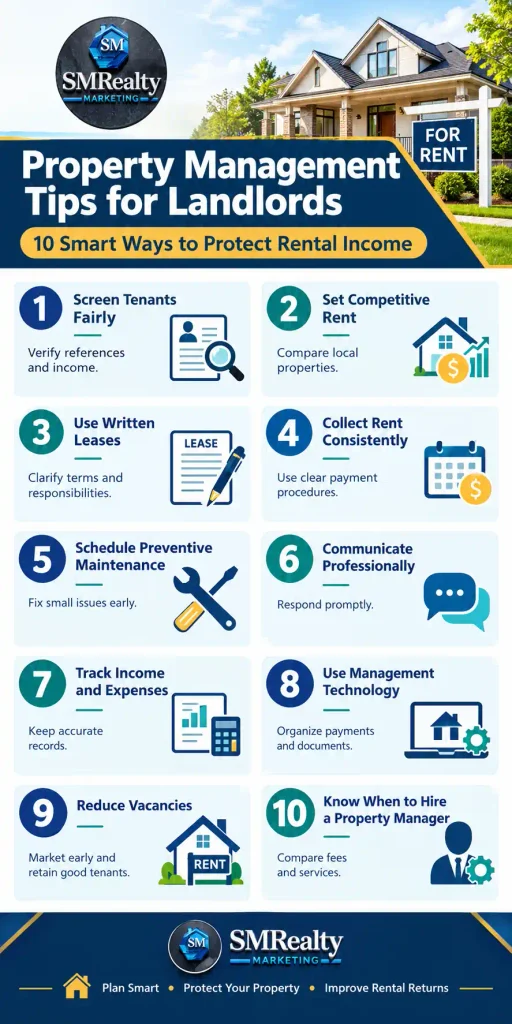
Property Management Tips for Landlords: 10 Smart Ways to Protect Rental Income
Managing a rental property can become stressful when tenants pay late, maintenance costs rise, or vacancies reduce your income. These Property Management Tips for Landlords provide a practical solution: establish clear rental policies, screen applicants consistently, maintain the property proactively, track every expense, and communicate professionally with tenants. Whether you own one apartment or several rental homes, a structured management system can reduce avoidable problems, protect your investment, and improve the tenant experience.
The key is to treat your rental property as a business while respecting tenants’ rights and complying with applicable local laws.
What Is Property Management for Landlords?
Property management involves the daily responsibilities of operating a rental property. These include advertising vacancies, selecting tenants, preparing rental agreements, collecting rent, arranging repairs, managing records, and handling lease renewals.
Landlords can manage these responsibilities themselves or hire a professional property management company. The right approach depends on the number of properties, available time, management experience, and cost.
10 Property Management Tips for Landlords
1. Screen Tenants Before Signing a Rental Agreement
Choosing a suitable tenant is one of the most important decisions a landlord makes. A consistent screening process can help assess an applicant’s ability to meet the lease terms and care for the property.
Review relevant income evidence, rental history, references, and other lawful screening information. Apply the same objective criteria to every applicant and follow applicable privacy, consumer-reporting, and anti-discrimination requirements.
Example: If two applicants express interest in an apartment, compare their verified information against your written screening criteria rather than relying on personal impressions.
Action checklist:
- Use a standard rental application.
- Verify relevant income and references.
- Explain the screening criteria in advance.
- Keep applicant information secure.
- Document the decision consistently.
2. Set a Competitive and Realistic Rental Price
Rental pricing affects both occupancy and profitability. A price that is too high may discourage qualified tenants, while an unnecessarily low price can reduce potential income.
Compare similar properties in the same neighborhood, considering location, size, condition, furnishing, parking, amenities, and lease terms. Use recent local rental evidence wherever possible rather than relying entirely on advertised prices.
Example: if comparable apartments are renting for approximately $1,000 per month, advertising a similar unit at $1,200 without additional benefits may increase the time it remains vacant.
Review pricing at appropriate renewal points and follow local rules governing rent increases.
3. Use a Written Rental Agreement
A detailed rental agreement sets expectations and reduces misunderstandings. It should clearly explain the rent amount, due date, lease duration, security deposit arrangements, maintenance reporting process, utility responsibilities, and applicable notice requirements.
Include any other lawful terms relevant to pets, parking, property use, and renewal procedures.
Have a qualified local professional review the agreement if you are unsure about mandatory provisions or enforceability. Never assume that a clause is valid simply because it appears in a template downloaded online.
4. Make Rent Collection Consistent and Predictable
Reliable rent collection helps landlords manage mortgage payments, insurance, repairs, and other operating expenses.
Establish a clear payment procedure and provide tenants with the available payment methods before the tenancy begins. Where permitted, consider automatic payments, electronic transfers, or property management software.
Use a written process for late payments:
- Confirm whether the payment is actually overdue.
- Send a polite reminder referencing the agreement.
- Document communications and any payment arrangement.
- Follow the notice and enforcement procedures required by local law.
Avoid informal or inconsistent penalties. Late fees, notices, and other remedies must comply with the rental agreement and applicable law.
5. Schedule Preventive Property Maintenance
Preventive maintenance helps identify small problems before they become expensive repairs. It can also improve tenant satisfaction and protect the long-term condition of your property.
Develop a schedule covering plumbing, electrical systems, heating and cooling equipment, roofing, drainage, pest prevention, and safety devices as applicable.
| Frequency | Suggested maintenance task |
|---|---|
| Monthly | Review maintenance requests and investigate recurring problems |
| Quarterly | Check visible plumbing issues, ventilation, and common areas |
| Seasonally | Inspect weather protection, drainage, cooling, or heating systems |
| Annually | Arrange appropriate professional servicing and a broader condition review |
| At tenant turnover | Document property condition and complete necessary repairs |
Adapt this schedule to the building, climate, equipment, and local safety requirements. Give legally required notice before entering an occupied rental home, except where a lawful emergency exception applies.
6. Communicate Clearly and Professionally
Good communication helps prevent minor misunderstandings from becoming major disputes. Give tenants a reliable contact method and explain how to report ordinary maintenance problems and emergencies.
Acknowledge requests, provide realistic timelines, and explain delays. Keep written records of important conversations, repair approvals, complaints, and agreed payment arrangements.
Example: If a plumber cannot attend until the next morning, tell the tenant when the visit is expected and explain any temporary safety measures needed.
Respect tenant privacy and the legal right to occupy the property without unreasonable interference.
7. Track Rental Income and Expenses
Accurate bookkeeping helps you understand whether a property is performing as expected. Record rent received, repairs, insurance, property-related taxes, management fees, utilities paid by the owner, and other legitimate operating expenses.
Separate personal and rental transactions where practical, and retain invoices, receipts, agreements, and relevant tax records.
Example: illustrative monthly rental cash flow
| Item | Amount |
|---|---|
| Monthly rent received | $1,500 |
| Maintenance allowance | $100 |
| Insurance and property taxes | $150 |
| Management and administration | $120 |
| Vacancy and unexpected-cost reserve | $100 |
| Cash remaining before mortgage and other costs | $1,030 |
This simplified example excludes mortgage payments and other possible expenses. The remaining amount is not necessarily taxable profit. Actual results depend on the property, accounting method, financing, and local tax rules.
8. Use Property Management Technology Wisely
Property management software can centralize rent records, lease documents, maintenance requests, tenant communication, and financial reporting.
For a landlord with one property, a well-organized spreadsheet and secure digital folders may be sufficient. Owners managing several units may benefit from automated reminders, payment tracking, repair workflows, and consolidated reporting.
Compare software based on its actual fees, security measures, reporting functions, payment options, and suitability for your local market.
Technology should simplify management rather than replace sound decisions or personal communication when a situation requires judgment.
9. Reduce Vacancies and Retain Good Tenants
Every vacant period can mean lost rent while some property expenses continue. To reduce avoidable vacancies, prepare the property before advertising, use accurate listing photographs, respond promptly to inquiries, and arrange convenient viewings.
Start lease-renewal conversations early enough to understand the tenant’s plans and meet applicable notice requirements. Address recurring maintenance concerns and review whether the rent remains competitive.
Example: Resolving persistent water-pressure problems may help retain a tenant more effectively than offering a small discount while leaving the underlying issue unresolved.
A professional move-out process also helps: document the property’s condition, arrange repairs promptly, and begin marketing when legally and practically appropriate.
10. Know When to Hire a Property Manager
Self-management may work well for owners with time, local knowledge, and a manageable portfolio. A professional manager may be worthwhile if you live far away, own several properties, lack time for emergencies, or find compliance and administration difficult.
Before hiring, compare the management fee, leasing charges, maintenance markups, contract duration, termination provisions, and reporting standards.
Ask how the manager screens tenants, handles emergency repairs, communicates with owners, and documents expenditure. Request sample reports and verify relevant qualifications or professional references.
Calculate the fee against the time saved and the services received. Hiring a manager does not automatically eliminate every legal or financial responsibility of ownership.
Common Property Management Mistakes to Avoid
Landlords can protect their time and rental income by avoiding these frequent mistakes:
- Selecting tenants without a consistent screening process.
- Setting rent without researching comparable properties.
- Ignoring minor maintenance problems.
- Relying on verbal agreements for important matters.
- Mixing personal and rental financial records.
- Entering occupied properties without the required notice.
- Failing to document payments, repairs, and complaints.
- Assuming that landlord responsibilities are identical in every jurisdiction.
Author’s Thoughts About Property Management Tips for Landlords
The best thought about property management tips for landlords is Build Systems, Not Just Rental Income. Simple is that to understand in real estate business.
In my view, successful property management is not about maximizing rent at every opportunity. It is about balancing sustainable income, property preservation, legal compliance, and a positive tenant relationship.
A landlord who responds promptly to repairs, maintains accurate records, and communicates clearly is better positioned to identify risks before they escalate. These habits are particularly valuable for small landlords who cannot rely on a dedicated management team.
My recommendation is to start with three essentials: a written management process, a realistic maintenance budget, and a consistent method for documenting every important transaction. Improve these systems gradually as your rental portfolio grows.
Conclusion Property Management Tips for Landlords
The best Property Management Tips for Landlords focus on preparation, consistency, and accountability. Screen tenants fairly, set rent using market evidence, maintain the property, collect payments systematically, monitor expenses, and follow local rental laws.
Whether you manage a single apartment or a growing portfolio, review your processes regularly. A well-managed rental property can be easier to operate, more attractive to tenants, and better positioned to deliver sustainable long-term returns.
FAQs : Property Management Tips for Landlords
1. What are the best property management tips for landlords?
Start with consistent tenant screening, competitive rent pricing, a clear written agreement, preventive maintenance, accurate bookkeeping, and professional communication.
2. How can landlords find reliable tenants?
Use a consistent screening process that evaluates relevant income evidence, rental history, references, and other lawful criteria. Apply the same standards fairly to all applicants.
3. How can landlords reduce rental vacancies?
Research local rents, maintain the property, advertise accurately, respond quickly to inquiries, and begin renewal discussions in line with applicable notice requirements.
4. How often should landlords inspect rental properties?
Inspection frequency depends on local law, the rental agreement, property condition, and the reason for inspection. Always follow applicable entry-notice and tenant-privacy requirements.
5. Is property management software worth it?
It can be useful when managing several units or coordinating frequent payments, repairs, documents, and reports. For a single property, a well-maintained spreadsheet may be adequate.
6. Should landlords hire a property management company?
Consider professional management when your time, distance, portfolio size, or need for specialist support makes self-management impractical. Compare the complete fee structure and service agreement first.
7. How can landlords control maintenance costs?
Schedule preventive inspections, address small issues early, compare qualified contractors, document completed work, and maintain a realistic reserve for repairs.
8. What records should landlords keep?
Keep rental agreements, payment records, receipts, maintenance reports, inspection records, required notices, correspondence, and relevant tax documentation for the periods required by local law.
9. What legal responsibilities do landlords have?
Responsibilities vary by jurisdiction but may include maintaining a habitable property, protecting tenant privacy, handling deposits correctly, following fair housing rules, and complying with notice and eviction procedures.
10. How can landlords improve rental property profitability?
Monitor net operating income, vacancy periods, repair expenses, rent collection, and tenant turnover. Make improvements based on actual costs and local rental demand rather than rent increases alone.