Historic Homes Preservation and Investment is to balance architectural conservation with financial planning. Before purchasing a historic property, conduct a professional inspection, verify preservation regulations, and estimate restoration, maintenance, and insurance costs. Preserve original features such as wooden floors, traditional windows, and decorative facades while carefully upgrading plumbing, electrical systems, and energy efficiency.
Research local property demand and calculate potential rental income or resale value before investing. Explore eligible preservation grants and tax incentives to reduce expenses. Finally, hire experienced restoration contractors and maintain an emergency budget for unexpected repairs.
On the upside, many regions offer tax incentives or grants for owners who maintain and restore historic properties, which can help offset the higher costs often associated with specialized repairs and period-appropriate materials. Buyers should budget carefully for maintenance, as older homes may have outdated electrical, plumbing, or structural systems that require updating to meet modern safety standards.
Despite the added complexity, historic homes often hold strong appeal and resale value due to their scarcity and architectural significance. For buyers willing to take on the responsibility of preservation, they can be both a rewarding place to live and a sound long-term investment.
These strategies help protect cultural heritage while improving the potential for sustainable, long-term real estate returns.
Historic Homes Preservation and Investment
Historic homes offer a unique opportunity to combine architectural preservation with real estate investment. However, successful ownership requires more than appreciating an old building’s beauty. Investors must evaluate restoration expenses, maintenance requirements, legal restrictions, financing options, and future demand.
Historic Homes: Preservation and Investment is about protecting architectural heritage while making financially informed property decisions. By researching the local market, inspecting structural conditions, preserving original features, and exploring eligible incentives, buyers can reduce risks and identify opportunities for long-term value.
The key is to balance historical authenticity with modern comfort, safety, and practical property management.
What Makes Historic Homes Valuable?
Historic homes are properties associated with a community’s architectural, cultural, or historical development. They may feature traditional craftsmanship, original woodwork, decorative ceilings, period windows, distinctive facades, or historically significant layouts.
Their value depends on several factors:
- Architectural significance: Distinctive design and craftsmanship can attract interested buyers.
- Location: Historic districts near employment centers, cultural attractions, and amenities may appeal to residents and visitors.
- Rarity: Unique features may differentiate a property from newer homes.
- Condition: Well-maintained properties can avoid some of the costs associated with neglected buildings.
- Market demand: Local buyer preferences determine whether historical character translates into a price premium.
Historic status alone does not guarantee appreciation or profitability. Investors should compare recent sales, rental demand, maintenance costs, and competing properties before purchasing.
Five Strategies for Historic Homes: Preservation and Investment
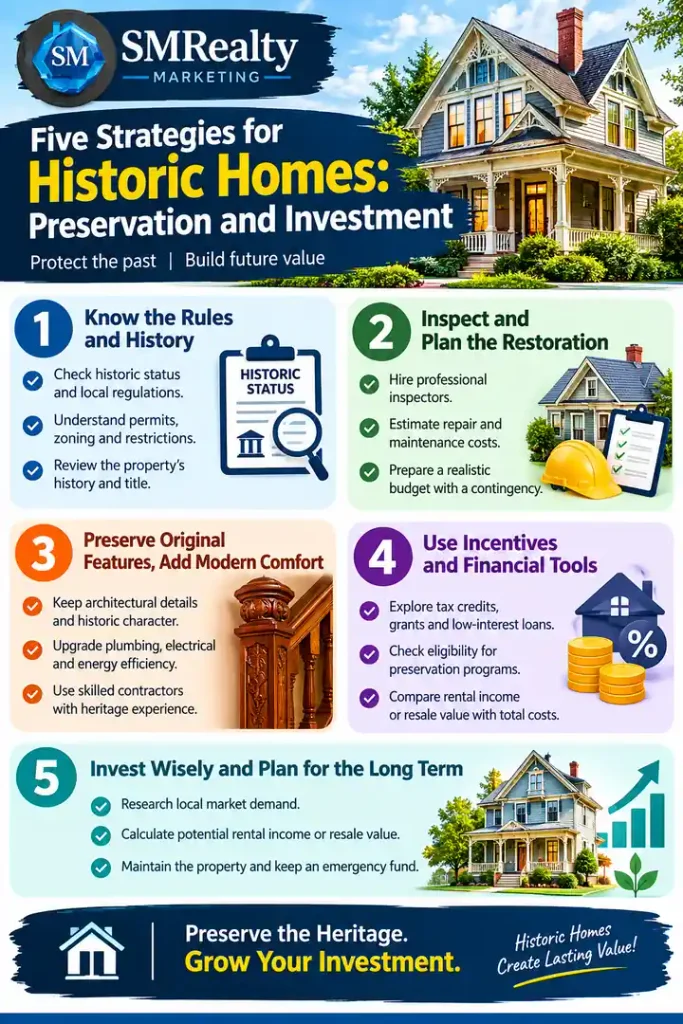
1. Research the Property’s History and Legal Status
Before buying a historic property, investigate its ownership records, architectural history, designation status, and applicable preservation rules.
A property may be individually listed, located within a historic district, or recognized locally without appearing on a national register. These distinctions can affect available incentives and renovation requirements.
Contact the relevant planning department or preservation authority to establish which changes require approval. Confirm title, zoning, easements, permitted uses, and any outstanding legal issues.
Example: An investor planning to replace original windows may discover that the local preservation authority requires historically compatible designs. Identifying this restriction before purchasing helps avoid unexpected expenses.
2. Conduct a Professional Structural Inspection
Older properties may contain hidden defects involving foundations, roofs, drainage, wiring, plumbing, or timber. Arrange a thorough inspection by qualified professionals familiar with traditional buildings.
Investigate:
- Foundation movement and structural stability.
- Roof leaks and deteriorated masonry.
- Dampness, ventilation, and drainage.
- Electrical and plumbing systems.
- Hazardous materials where relevant.
- Fire safety and accessibility requirements.
Request specialist assessments when the initial inspection identifies significant concerns. Obtain written estimates for essential repairs before finalizing the investment.
3. Prepare a Realistic Restoration Budget
Historic home renovation can cost more than ordinary refurbishment because traditional materials and specialist skills may be necessary.
Your budget should include the purchase price, inspections, permits, architectural services, materials, labor, insurance, financing, taxes, utilities, and ongoing maintenance.
| Illustrative project expense | Estimated cost |
|---|---|
| Property purchase | $200,000 |
| Restoration and repairs | $55,000 |
| Professional fees and permits | $8,000 |
| Financing and holding costs | $12,000 |
| Contingency reserve | $10,000 |
| Total investment | $285,000 |
These figures are hypothetical, not market quotations. Actual expenses vary by location, building condition, project scope, and currency.
Keep a contingency reserve for unforeseen repairs. Reassess the investment if contractor estimates or approval requirements materially increase the expected cost.
4. Preserve Original Features While Modernizing Carefully
The best restoration projects protect historically significant features while improving safety, comfort, and usability.
Consider repairing original doors, timber floors, decorative plasterwork, masonry, and period windows when practical. Introduce modern electrical systems, heating, ventilation, plumbing, and lighting with minimal damage to important architectural elements.
Energy-efficiency upgrades require particular care. Inappropriate insulation or poorly designed ventilation can trap moisture and damage traditional materials.
Historic England’s technical guidance recommends assessing the building as a whole before implementing energy-efficiency measures. Consult specialists who understand traditional construction before making substantial changes.
5. Explore Financial Incentives and Investment Opportunities
Historic preservation programs may offer tax credits, grants, low-interest loans, or other assistance. Availability depends on location, property eligibility, ownership, intended use, and the proposed work.
In the United States, the federal Historic Rehabilitation Tax Credit can provide a 20% credit on qualifying rehabilitation expenses for eligible income-producing historic buildings. Certification and compliance with rehabilitation standards are required; an ordinary owner-occupied home does not qualify for this federal credit.
Consult the National Park Service’s Historic Preservation Tax Incentives guidance and the IRS rehabilitation credit guidance for eligibility details.
Do not include an incentive in your financial forecast until you have verified the requirements and likely benefit with the relevant authority and a qualified tax professional.
How to Evaluate a Historic Property Investment?
A property can be architecturally beautiful but financially unsuitable. Compare the total acquisition and restoration cost with realistic resale value or expected rental income.
For a rental property, calculate annual rental income minus vacancy, maintenance, insurance, taxes, management, and other operating expenses. For a resale project, subtract acquisition, renovation, financing, holding, and selling costs from the expected sale price.
Illustrative resale example:
| Item | Amount |
|---|---|
| Purchase price | $200,000 |
| Restoration and other project costs | $85,000 |
| Total project cost | $285,000 |
| Expected resale price | $330,000 |
| Estimated profit before tax | $45,000 |
This example assumes the expected resale price is achieved and excludes any additional costs not included in the project budget. A lower sale price or unexpected repair can reduce the return substantially.
Always compare a conservative scenario with your expected outcome before investing.
Common Risks and How to Reduce Them
Investment Risk vs Practical Solution
| Investment risk | Practical solution |
|---|---|
| Hidden structural damage | Obtain specialist inspections |
| Expensive traditional materials | Request multiple itemized quotations |
| Delayed preservation approvals | Consult authorities before starting work |
| Rising insurance premiums | Obtain insurance quotations before purchase |
| Weak resale or rental demand | Research comparable sales and local rents |
| Poorly designed energy upgrades | Use traditional-building specialists |
| Unexpected maintenance | Establish a long-term maintenance reserve |
Insurance deserves particular attention because some historic homes require specialized repair methods or historically compatible replacement materials. Confirm available coverage and rebuilding terms before committing to the purchase.
Author’s Thoughts: Historic Homes Preservation and Investment
In my view, “Preservation Should Support Long-Term Value.” the strongest historic property investments combine respect for architectural heritage with realistic financial planning. Original features can distinguish a home, but preservation alone cannot overcome a poor location, excessive purchase price, or uncontrolled restoration costs.
Investors should prioritize structural stability, document every improvement, use qualified contractors, and make modern upgrades that respect the building’s character. They should also avoid assuming that historic designation automatically creates tax benefits or increases market value.
A successful project protects the property’s identity while ensuring that it remains safe, functional, and financially sustainable.
Conclusion Historic Homes: Preservation and Investment
Historic Homes Preservation and Investment offers an opportunity to protect architectural heritage while building a real estate asset. Success depends on thorough research, professional inspections, accurate budgeting, appropriate restoration techniques, and realistic resale or rental forecasts.
Before purchasing, verify preservation restrictions, insurance coverage, available incentives, and local demand. With careful planning and long-term maintenance, investors can make informed decisions that balance historical significance with financial performance.
Recommendations On Historic Homes: Preservation and Investment
- Research the property’s legal and historical status before purchasing.
- Inspect the building and obtain detailed restoration estimates.
- Preserve important original features whenever practical.
- Confirm incentive eligibility before including benefits in your calculations.
- Compare projected returns with conventional properties in the same market.
- Maintain records of permits, restoration work, materials, and maintenance.
- Seek qualified architectural, legal, tax, and real estate advice.
FAQs Historic Homes: Preservation and Investment
1. Are historic homes a good investment?
They can be, particularly in areas with strong demand and well-maintained historic districts. However, returns depend on purchase price, renovation expenses, restrictions, maintenance, and local market conditions.
2. Do historic homes appreciate faster than modern homes?
Not necessarily. Appreciation varies by location, property condition, buyer demand, and broader economic conditions. Compare local sales data instead of assuming historic properties always outperform newer homes.
3. Are there tax credits for restoring historic homes?
Some jurisdictions offer preservation incentives. In the United States, the federal 20% rehabilitation tax credit generally applies to qualifying historic buildings used for income-producing purposes, not ordinary owner-occupied residences.
4. Can you modernize a historic home?
Yes, but some changes may require approval. Modern plumbing, heating, lighting, and energy-efficiency improvements should be designed to protect significant architectural features and avoid damaging traditional materials.
5. What are the biggest risks of buying historic property?
Major risks include hidden structural defects, expensive specialist repairs, preservation restrictions, insurance limitations, and weaker-than-expected resale demand.
6. How can investors make money from historic homes?
Possible strategies include long-term rentals, carefully planned resale projects, hospitality uses where permitted, and adaptive reuse. The best strategy depends on local demand, legal permissions, operating costs, and investment objectives.
7. How should buyers estimate historic home restoration costs?
Arrange a specialist inspection, obtain itemized contractor estimates, check approval requirements, and include professional fees, financing, holding costs, and a contingency reserve.